




Cahuita National Park: the complete guide 2024
Cahuita National Park is one of a kind in Costa Rica. With only one long trail that interposes between the Suarez and Perezoso rivers and the Caribbean coast, your walk in this park will certainly be special. Cahuita Park is a reserve that represents the perfect example of collaboration between the local community and the Costa Rican government, committed to habitat preservation and environmental protection. Inside the Cahuita National Park you will certainly encounter varied fauna, but you will be amazed by the sociability of raccoons: they are not afraid of humans in the slightest.
What can we say about the coast? The Caribbean coast is already commented on for its name alone. This piece of coast is home to the most important coral reef in Costa Rica, in fact you can also choose to do a bit of snorkeling or a nice swim for a siesta.
Things to know before entering Cahuita
Cahuita National Park has two different entrances: one in Playa Blanca and the other in Puerto Vargas. There isn’t much difference between the two entrances, because you will still follow the same path and be able to admire the same beauties. Entrance to Puerto Vargas costs around $5.00, while passing through Playa Blanca you can leave a voluntary donation at the reception.
Cahuita National Park: opening times and prices
Playa Blanca Sector
Mon-Sun from 7:00 to 17:00
Puerto Vargas Sector
Mon-Sun from 8:00 to 16:00
Prices
Playa Blanca: voluntary donation
Puerto Vargas: adults and children $5.00
Regulations of the Cahuita National Park
The regulations of the Cahuita National Park allow the introduction of food (which is very rare), but do not feed the animals under any circumstances.
What is allowed to do inside Cahuita Park?
- Take photos and capture videos WITHOUT FLASH
- Bring water and food with you
- Bring sunscreen and mosquito repellent
What is not allowed inside Cahuita Park?
- Taking Photos with Flash
- Bring alcohol and narcotics
- Feeding wildlife
- Speak loudly
- Collect flora, animals and minerals
- Take or damage corals and seabed
- Smoking cigarettes and e-cigarettes
- Bring lighters and matches
- Bring pets
- Camping, hunting and fishing
- Using drones
- Swim in areas not designated for this purpose
How to get to Cahuita National Park?
The Cahuita National Park is a short walk from the town of the same name in the province of Limón.
By car
We recommend staying in Cahuita or Puerto Viejo de Talamanca to visit Cahuita National Park, because the drive from San Jose is quite long and tiring. However, the route from the capital to the park is truly very suggestive, in fact you will cross a large portion of jungle and then reach the coast. This “transition” is very fascinating and the road is smooth, without too many inconveniences: you may find some work in progress because they are widening the highway (at least at the time of writing). We traveled this road and stopped in a wonderful place for breakfast.
By bus
If you travel by bus it is advisable to use the route made available by Autotransportes Mepe, which connects San José to Puerto Viejo de Talamanca. The ticket price is approximately $12.00 and the trip lasts approximately 5 hours and 30 minutes. There are four departure times (Mon-Sun 6:00, 10:00, 14:00, 16:00) and the company’s terminus is located on Avenue 9. If you want to compose your own personalized route you can consult the bus timetables.
Parking at Cahuita National Park
There is no real parking near the Cahuita National Park. We recommend that you go to the reserve early in the morning and enter from Playa Blanca: you will have no problems parking.
What will you see at Cahuita National Park?
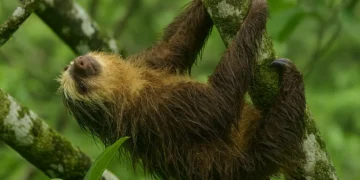
You’re spoiled for choice! At Cahuita Park you certainly won’t be bored, because in addition to the humid tropical forest, you will find animals such as sloths, toucans, raccoons, monkeys, basilisks, snakes (rare), crocodiles (rare) and numerous birds.

What kind of wildlife can you expect at Cahuita?
The rich fauna of Cahuita National Park has nothing to envy of other parks in Costa Rica. As soon as we entered we were lucky enough to witness a “family meeting” between capuchin monkeys, where the leader of the pack tried to assert his opinions. In Cahuita you will be able to observe:
- Capuchin monkeys
- Squirrel Monkeys
- Sloths
- Raccoons
- Toucans
- Snakes
- Turtles
- Pelicans
- Scarlet macaw (rare)
- Crocodiles (rare)
- Basilisks (the famous lizards that walk on water)
- Corals
- Other birds
- Various insects
What kind of flora can you expect at Cahuita?
The flora of the park is varied and mostly tropical. In fact, it is located just a few meters from the beach and is crossed by various rivers such as the Rio Suarez, the Rio Perezoso and the Kelly Creek.
- Ferns
- Palms
- Cedars
- Milk tree
- Mangroves

Tips regarding the fauna of Cahuita Park
The Cahuita National Park was founded in 1970 to protect the 6 km2 of coral reef that its coasts host. You will only be able to snorkel and visit the reef with a guide: it is strictly forbidden to damage or take corals.
The trails of the Cahuita National Park
Cahuita is a national park that has only one trail divided into multiple sectors. But in fact the route is unique and from the western entrance near Kelly Creek to Puerto Vargas it covers a distance of almost 4 km. The return walk therefore consists of approximately 8 km of pleasant walking.
From Kelly Creek to Rio Suarez
Entering from Playa Blanca you will travel about 1.5 km before reaching the first beach lapped by the mouth of the Rio Suarez. Here you will certainly admire many animal and floral species, but you will also be able to sunbathe on Playa Blanca, a destination for many birds.
From Rio Suarez to Punta Cahuita
This section of the trail is 2.3 km long and capuchin monkeys often come close to pose and have their photos taken.
From Punta Cahuita to Puerto Vargas
Less traveled than the others, this sector offers above all thick vegetation and leads to one of the best spots for snorkelling.
Guided Tours
The park offers some guided tours with official guides. A guide is necessary to see Costa Rica’s largest coral reef up close. It is also possible to take night walks and a bird watching walk.
Where to eat in Cahuita National Park?
This park is one of the few where it is allowed to bring food inside (or at least in our exeprience). However, near the Playa Blanca entrance (which is the closest to the city) there is a very cheap soda where you can refresh yourself and enjoy an excellent coffee.
Where to stay to visit Cahuita National Park?
Visiting the Cahuita National Park probably means stopping for a few days on the Caribbean side of Costa Rica. The best location to stay, however, is not Cahuita, but Puerto Viejo de Talamanca, because it is better equipped and with the delightful Playa Chiquita just a stone’s throw away. As in other areas of the Central American country, there are mainly 4 types of accommodation:
- Cabins
- Apartments
- Hotels
- Campsites
Where to buy tickets to Cahuita National Park?
Entrance tickets can be bought on site at the Puerto Vargas entrance, while if you enter from Playa Blanca you can make a donation.
How to contact Cahuita National Park?
Tel: +506 27529150461
Conclusion: our experience at Cahuita National Park
Cahuita Park was the first protected area we visited upon arriving in Costa Rica. Like any first love, meeting your first sloth is never forgotten. The experience was unique also thanks to the sunny day that accompanied us along the Cahuita path, but undoubtedly the memory we hold most dear is that of the attempted theft of our bag… by a raccoon! Lying on the white sand of Playa Blanca was relaxing and continuing along the shore of the Rio Perezoso allowed us to see a basilisk maneuvering on the water. Cahuita Park cannot be left aside, especially for its fantastic coral reef.
[/vc_column_text]
[/vc_column][/vc_row]
