




Manuel Antonio National Park, between sea and fauna: the complete guide
Manuel Antonio National Park is among the 10 most visited parks in the world, thanks to its biodiversity characterized by rich fauna and the sea that gives comfort on hot days on the Pacific coast. With Trip Around Costa Rica we visited the park in January 2024 and upon our arrival we were struck by many things that we list in this complete guide. In addition to prices and paths, we will help you get to know some spaces that only the most attentive visitors can discover. If you still don’t know how to organize your trip to Costa Rica, take a look at this 2024 guide.
Things to know before entering Manuel Antonio
With 1953 hectares of land and 25,635 of sea, Manuel Antonio National Park is one of the most interesting parks in the world, despite not being among the largest. Costa Rica pays a lot of attention to environmental conservation and the preservation of the numerous plant and animal species scattered throughout its territory. For this reason, before entering one of the many national parks, it is advisable to read up properly on the entry and behavioral rules.

Manuel Antonio National Park opening times and prices
July-November: Wednesday to Monday 07:00-16:00
December-June: every day 07:00-16:00
Adults: $16.00 + tax ($18.08)
Children 2 to 12 years old: $5.00 + tax ($5.65)
Infants: free
Official Guided Tours: $70.00 Adults, $57.00 Ages 2 to 12
Manuel Antonio National Park Regulations
At the entrance to the park there are two stations for preliminary control, before arriving at ticket control. In fact, it is very important to know what to put in your backpack before going to the park so as not to run into unpleasant unexpected events, such as throwing away food or unauthorized devices.
What is allowed to do inside Manuel Antonio Park?
- Take photos and capture videos WITHOUT FLASH
- Bring water with you, but only in water bottles or special containers
- Bring sunscreen and mosquito repellent
What is not allowed inside Manuel Antonio Park?
Although it is reported differently on some sites, we recommend that you rely on the list below, as we have verified it personally.
- Taking Photos with Flash
- Bring food of any kind (not even in special containers)
- Bring alcohol and narcotics
- Feeding wildlife
- Speak loudly
- Collect flora, animals and minerals
- Smoking cigarettes and e-cigarettes
- Bring lighters and matches
- Bring pets
- Camping, hunting and fishing
- Using drones
How to get to Manuel Antonio National Park?
The Manuel Antonio National Park is located right next to the village of the same name.

By car
If you want to rent a car, reaching the park is very easy, just get to the center of Quepos using a common navigator and follow these directions. In this regard, we recommend that you get an eSim to be able to take advantage of the data network without having to spend a fortune with your operator.
By bus
Also from Quepos there is a very comfortable bus that runs every 15 minutes. It costs 365 Colones, approximately $0.75
Parking at Manuel Antonio National Park
The park does not provide official parking and as you get closer to your destination you will find numerous parking spaces. However, we recommend that you opt for Manuel Antonio Parking, which costs $10. Although it calls itself an official car park, in reality it is not. But it is very close to the entrance and more guarded than others.
Tips for getting to Manuel Antonio
Along Ruta Nacional Treciaria 618, about a kilometer from the park, you may find avid parking attendants who will try to convince you that you cannot continue, heartily suggesting that you turn right. In addition to being poorly monitored car parks, they are far from the entrance to the Manuel Antonio National Park, so go straight ahead without too many hesitations
What will you see at Manuel Antonio National Park?
As mentioned, Manuel Antonio is probably the best park in all of Costa Rica, although a lot depends on the needs and interests of each tourist. The park’s trails pass through a rich tropical forest to lead to some of the most beautiful beaches in the country.
What kind of wildlife can you expect in Manuel Antonio?
The fauna is quite rich and there is even an exclusive species of monkey in the park, namely the Squirrel Monkey. This primate is at high risk of extinction and you can only find it here: the latest data collected speaks of 1,500 specimens remaining, so it can be difficult to observe them.

During our trip we were also very lucky to find a Tamandua, an anteater which, unlike the giant one, can climb trees. But let’s see what else to expect from a faunal point of view:
- Capuchin monkeys
- Squirrel Monkeys
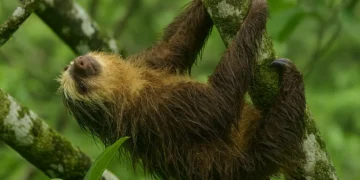
- Sloths
- Coati (rarely)
- Raccoons
- Agouti (rodents)
- Tamandua (Anteater)
- Toucans
- Iguanas
- Snakes
- Turtles
- Pelicans
- Scarlet macaw (rare)
- Kingfisher
- Other birds
- Various insects
What kind of Flora to expect at Manuel Antonio?
The flora of Manuel Antonio is also quite rich, obviously much more than the fauna. With over 350 species of plants, in the small park of Costa Rica you can find:

- Oaks
- Guapinol
- Cedars
- Milk tree
- Mancinella
- Mangroves
- Coconut palms
Tips regarding the flora of Manuel Antonio
You need to pay close attention to Mancinella. This tree is present in the park and all the beaches are dotted with its fruits (similar to small apples). We suggest you not touch the plant and not ingest anything that comes from it, but obviously we don’t want to be alarmist. You will surely notice that its fruits are not ingested even by animals, precisely because it is toxic and can cause severe irritation, as well as nausea and diarrhea if ingested. In case of rain it is advisable not to stand underneath it.
The paths of Manuel Antonio National Park
As with any self-respecting park, Manuel Antonio also offers a vast choice despite its small size. In the park you can find 7 main paths that branch into forest areas and marine areas.
La Catarata Path
This will be the first path you will encounter once you enter the park. The route is about 1 km long and leads to a very charming small waterfall. Be careful not to raise your voice too much as you walk along it because you may encounter numerous animals.
Perezoso Path
The Perezoso path (as the sloth is called) extends for about 3 km and reaches an altitude of 44 metres. Entering the park it branches out into the Punta Catedral and Mirador paths, which in turn are connected to the Manuel Antonio and Espadilla beaches. This route is the favorite of raccoons.
Punta Catedral Path
Punta Catedral is a scenic trail that leads to Playa Espadilla and Playa Manuel Antonio. Its length is 1.5 km and offers breathtaking views.
Playa Gemelas Path
As the name suggests, this route leads to the twin beaches of Manuel Antonio National Park. This is a very short route, but where you can encounter a vast variety of floral and faunal species.
Mirador Path
The Mirador route is perhaps the most suggestive from a panoramic point of view. Thanks to its length of 1.5 km you will be able to observe the Pacific Ocean and, with a little attention, some toucans.
Los Congos Path
Very short trail that serves as a connection between the Mirador and the Puerto Escondido trail.
Puerto Escondido Path
Here too the view is breathtaking. This path will also train your legs, in fact you will find a few climbs and steps. Once you reach the top, however, you will be rewarded handsomely for your effort
The beaches of Manuel Antonio
After long walks, a siesta on the beach is what you need. Inside the Manuel Antonio National Park you will have a wide choice, in fact via the new pier recently built you can reach Playa Espadilla Sur (the northern part is the one outside the park) and enjoy the company of very bizarre iguanas and hermit crabs. The opposite is Playa Manuel Antonio, much smaller but which guarantees less strong currents than the first.

Continuing you will find Playa Gemelas, two “twin” beaches where in case of low tide you can have a spectacular view of Punta Catedral.
Helpful tip: we suggest you opt for Playa Espadilla if you want a bit of relaxation because, despite being larger, it is much less crowded than Playa Manuel Antonio. If you head to the edge of the park, you will be able to observe the resting area of the iguanas and an islet on which pelicans often stop waiting for low tide.
Guided Tours
The park offers numerous guided tours with official guides. Outside Manuel Antonio National Park is full of so-called guides who will try to be hired, but the truly authorized personnel are only found inside the park. Here are the most popular tours:
Guided tour
Adults: $70.00
ages 3 to 12: $57.00
Infants: free
Private tour
Adults: $85.00
ages 3 to 12: $73.00
Infants: free
Night walk
Adults: $59.00
ages 4 to 11: $25.00
from 0 to 3 years: free
Where to eat at Manuel Antonio
As mentioned at the beginning of the article, it is not possible to bring food into the Manuel Antonio National Park. The reserve provides a Coffee Shop that is not exactly cheap ($10 dollars for a sandwich), but it will be the only solution to get something to eat. The restaurant is surrounded by an immense green cage to contain the curious and hungry monkeys.
Where to buy tickets for Manuel Antonio National Park?
Entrance tickets can be purchased online, as can the various guided tours that the park offers.
For the entrance ticket: SINAC
For guided tours: Manuel Antonio Park
How to contact Manuel Antonio National Park?
Email: info@manuelantoniopark.com
Tel: +506 2777-4221 +1 800 280 2597
Where to stay to visit Manuel Antonio National Park?
If you want to stay a few days in this area of Costa Rica, you can find all types of accommodation between Quepos and Manuel Antonio. The town of Quepos is much less charming, however it guarantees every type of service such as supermarkets, banks, restaurants, pharmacies and bars. The two areas are neighboring so I advise you to look for accommodation in Manuel Antonio and, if necessary, go to Quepos only for the services you need.
On Ruta Treciaria 618 there are many secluded accommodations, away from the noise of the street. Here’s what you can find:
- Cabins
- Apartments
- Hotels
- Campsites
Conclusion: Our experience at Manuel Antonio National Park
Visiting Manuel Antonio was one of the best experiences in 38 years. The meeting with a mother sloth and her baby clinging to her belly was one of the most exciting moments, in addition to the numerous Capuchin Monkeys who were amused and showed off like divas. The Pacific coast was very relaxing and here too, we had an interesting encounter with many iguanas, but above all with a pelican who was preparing to get some food.
A stop at Manuel Antonio National Park is mandatory for anyone visiting Costa Rica.

