

When to go to Costa Rica?
The million-dollar question
Costa Rica is a destination that captivates travelers from around the world for its biodiversity, breathtaking beaches, lush rainforests, and vibrant culture.
But it is equally true that everyone asks the usual question before booking a flight: when to go to Costa Rica?
If you’ve wondered this yourself, we have to confess that it’s the same question we asked ourselves before taking a fantastic trip to Costa Rica between January and February.
Many travelers like you must be wondering this right now.
However, deciding when to go to Costa Rica can be tricky because of seasonal weather variations and local wildlife activities-many people want to observe the local animals make plans based on that, rightfully so.
This article will explore in detail what is the best time to visit Costa Rica, analyzing the seasons, temperatures, and wildlife activities, with a special focus on humpback whales, because it was a great experience that we would like you to have too.
Climate and seasonality in Costa Rica
 What makes the difference in knowing when to go to Costa Rica is undoubtedly the seasonal rhythms and climatic conditions of the Central American country.
Costa Rica is located between the 9th and 11th north parallels, which means it enjoys a tropical climate.
Despite this, however, the topography varies greatly, with mountainous areas, plains, and coasts influencing the local climate.
In general, the country can be divided into two main seasons: the dry season and the rainy season.
Dry Season (December – April)
The dry season, also known as “verano” (summer in Spanish), is the most popular time to visit Costa Rica.
During these months temperatures are high and rainfall is low, especially in the Pacific and Central Valley (San Jose) regions.
Average temperatures range from 25°C to 30°C in the lowlands and along the beaches.
In mountainous areas, such as Monteverde and near Tenorio, temperatures can be slightly lower, ranging from 15°C to 25°C.
This is the best time for outdoor activities such ashiking, surfing, and exploring nature reserves.
The beaches are perfect for relaxing and water sports, then underwater visibility is excellent for snorkeling and diving.
Rainy Season (May – November)
The rainy season, or “invierno” (winter), is marked by frequent rains, especially in the afternoon and evening.
However, this season also has its advantages to appreciate.
Temperatures during the rainy season are similar to those during the dry season, with averages ranging from 24°C to 28°C in coastal regions and 15°C to 20°C in mountainous areas.
The rains make the rainforests especially lush and the waterfalls spectacular.
This, by the way, is the best time to view Costa Rica’s biodiversity, as there is increased wildlife activity, especially birds such as the Quetzal.
Also, which is no small feat, the rainy season is perfect for those seeking a quieter, less crowded experience. When to go to Costa Rica depends a lot on personal preferences and the activities you want to do.
Each region of the tropical country has, shall we say, its own standard climate, which can also help you identify an itinerary without major surprises (always keeping in mind that you are in a tropical area).
Regions and local weather conditions: here’s when to go to Costa rica

Costa Rica can be divided into several climatic regions, each with unique characteristics, but you should not interpret this as a certain definition of climate:
North Pacific (Guanacaste)
- Dry season: almost completely dry from December to April.
- Rainy season: heavy rains from May to November, but with many sunny days.
Central and South Pacific
- Dry season: warm and dry from December to April.
- Rainy season: heavy rains from May to November, with some sunny mornings.
Caribbean
- Dry season: February and March, September and October.
- Rainy season: November to January and April to August, but rainfall is distributed throughout the year.
Central Valley (San Jose and environs)
- Dry season: December to April.
- Rainy season: May to November, with frequent afternoon rains.
Activities of local wildlife

Since Costa Rica ‘s biodiversity is one of the main reasons to visit the country, it might be helpful for you to know what the local wildlife activity is when to go to Costa Rica.
In fact, each season offers unique opportunities to observe wildlife, whether you are looking for sloths, toucans, macaws or humpback whales.
We give you a brief list of the country’s main wildlife “habits.”
It will be largely up to you, but we chose when to go to Costa Rica, mostly with the intention of avoiding rain and seeing humpback whales.
Birds
- Quetzal: May and June are the best months to see the quetzal in the forests of Monteverde and San Gerardo de Dota.
- Toucans and Ara Macao: visible throughout the year, but activity increases during the dry season.
Sea Turtles
- Green turtle: nests along the Caribbean coast from July to October.
- Olive turtle: nests along Pacific coasts, with peaks from August to December.
Mammals
- Monkeys: easy to spot throughout the year in rainforests.
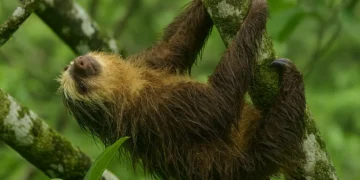
- Sloths: common sightings in areas such as Manuel Antonio National Park and Tortuguero.
Reptiles and Amphibians
- Red-eyed frogs: most visible during the rainy season.
- Iguanas: easy to spot throughout the year in warm, dry regions (we recommend Playa Espadilla Sur in Manuel Antonio).
Humpback whales
- Pacific migration: Humpback whales migrate from the southern hemisphere to the warm waters of the Central and South Pacific of Costa Rica to mate and give birth.
The best time to observe humpback whales in the Pacific Coast is from July to October. - North Atlantic Migration: Humpback whales migrating from the Arctic can be seen along the Caribbean coast and in Central Pacific waters from December to March.
We were lucky enough to see them in February with a pup - Whale Watching: The best locations for whale watching are Ballena Marine National Park in the Central Pacific region and the Osa Peninsula.
Whale watching excursions are especially popular in these areas during migration periods.
But so…is it possible to know when to go to Costa Rica?
As mentioned, when to go to Costa Rica depends a lot on the type of trip you want to take.
There is no definitive answer, as there should be.
What we can tell you though, from firsthand experience, is that between January 15 and early February we were privileged to see virtually everything we set out to see.
Hiking,humpback whale watching and encounters with iguanas, coati and sloths are just some of the amazing things we experienced.
The dry season, from December to April, is perfect for those seeking sun, beaches and outdoor adventures without worrying about rain.
However, the rainy season, May through November, offers a greener, lusher experience with fewer tourists and more wildlife activity (although we were fine with that anyway).
Each season has its pros and cons, but regardless of the time of year you choose, Costa Rica offers an unforgettable experience because of its extraordinary biodiversity and natural wonders.
We just recommend that you pack your bags and embark on an adventure you will never regret-we are sure you will. When to go to Costa Rica is actually a question whose answer will not change your fantastic experience by much.