

10 things not to miss in Costa Rica: the country you don’t expect
When we first landed in Costa Rica, we thought we knew what to expect: beaches, volcanoes, jungles and animals everywhere. But no one had prepared us for the feeling of peace that gets under your skin. In this country, you don’t run: you observe. You stop to let a monkey pass by, to enjoy a sunset or to have a word with a pineapple vendor on the side of the road.
Costa Rica is little larger than Belgium, but it contains 5 percent of the world’s biodiversity. It is a country that abolished the military in 1948 to invest in education and the environment-a detail that says a lot about its soul. And indeed, here, nature is a religion. National parks cover more than a quarter of the territory, and everywhere you hear that phrase that is now a trademark: “pura vida.”
We thought we’d suggest the 10 things not to miss in Costa Rica that we think best tell the soul of the country: authentic, diverse, and perfect for those who want to really travel, not just visit.
Manuel Antonio National Park: nature diving into the sea
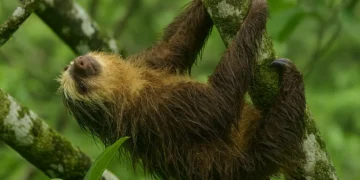
Small but legendary, Parque Nacional Manuel Antonio (on the Pacific coast near Quepos) is the country’s most visited and, if you like, you can read a detailed guide to it right on our blog. It was born in 1972 thanks to a popular protest opposing beach privatization-an act of collective love that has made it a symbol of Costa Rican environmental protection. Today it is a concentration of biodiversity: capuchin and howler monkeys, sloths, iguanas and hundreds of species of birds. Trails cross the jungle to dream beaches such as Playa Espadilla Sur and Playa Manuel Antonio, where the forest literally touches the sea.
Tip: Enter at opening (7:00 a.m.), bring water and swimsuit, and book the nature guide-you will see ten times more animals.
Río Celeste and Tenorio Volcano: the river that stole the sky
Volcán Tenorio National Park is home to one of the most photographed places in the country: the Río Celeste. The turquoise color is not legend but pure chemistry: it is caused by the suspension of silicon minerals that reflect light.The trail (about 6 km A/R) goes through the rainforest and leads to the iconic waterfall. When we arrived, after an hour of walking in the mud, the view left us silent.
Fun fact: According to an indigenous legend, when God finished painting the sky, he washed his brushes in this very river.
Bahía Ballena and Uvita: where whales draw the coast.

In Parque Nacional Marino Ballena, humpback whales arrive twice a year (December-March and July-October). And they do so in front of a beach that, seen from above, is shaped like a whale’s tail: an incredible geological accident.
During our excursion, we saw mothers and pups moving slowly as the guides explained how these warm waters are perfect for giving birth.
Tip: Choose tours with local marine biologists. They cost a little more but respect distance and really tell you about the ecosystem.
Tortuguero turtles: the miracle of life in the sand
Reaching Tortuguero is already an adventure: only boat or plane, no roads. The village lies between canals and forest, and is famous for the sea turtles that lay their eggs here (July to October for the green species).
We watched in silence as a turtle dug into the sand. No flash, just the sound of the sea and the guide whispering, “Now it’s starting.”
Environmental curiosity: the park is a mosaic of ecosystems: beaches, mangroves, canals and rainforests, a refuge for jaguars and caimans.
Arenal Volcano and La Fortuna: the sleeping giant
The Arenal Volcano, with its perfect cone, dominates the La Fortuna area. It remained active until 2010 and today is surrounded by natural hot springs. We trekked past lava flows and then soaked in the warm waters in the rain. Around, only greenery and the distant sound of the river
Historical background: the 1968 eruption destroyed three villages and forever changed the economy of the area, now reborn through ecotourism.
Monteverde: the forest that lives in the clouds
Founded in the 1950s by a community of Tennessee Quakers who fled the United States for pacifist reasons, Monteverde is now a biodiversity sanctuary. To walk its suspension bridges is to enter a fairy tale: orchids, moss, hummingbirds and a constant fog that seems to breathe.
Not to be missed: the Santa Elena Biological Reserve and night tours to spot nocturnal animals.
The Caribbean side: between reggae, coconut and coral reefs
Costa Rica ‘s Caribbean Coast is a world unto itself. In Puerto Viejo de Talamanca you breathe Afro-Caribbean culture, Creole cuisine and slow pace. Here we ate coconut rice with fresh fish while looking out to sea, and in Cahuita we snorkeled the most accessible coral reef in the country.
Cultural curiosity: the local population is largely descended from Jamaican workers who arrived in the 19th century to build the railroad.
Costa Rican coffee: black gold among volcanoes
Coffee cultivation has shaped the country’s history: in the 19th century it was the main source of wealth and prompted the construction of the first national theater in San José.
To visit a plantation, such as those in Alajuela or Naranjo, is to understand how much passion is behind each cup. They explained to us that the plants grow best because of the volcanic ash and the altitude.
Tip from us: try the “chorreador” method, the traditional wood and cotton filter used in Costa Rican homes.
Corcovado National Park: the last wild frontier

On the Osa Peninsula, Corcovado is called “the most biologically intense place on Earth.” This is no exaggeration: it is home to 3 percent of the world’s animal species. We walked between jungle and beach, encountered howler monkeys, scarlet macaws and tapirs. There is no Wi-Fi here, but there is everything else.
Environmental curiosity: the park was saved from mining in the 1980s thanks to a local volunteer movement.
The “pura vida”: more than a greeting, a way of life
In the end, the most beautiful thing about Costa Rica is not a place: it is an attitude. “Pura vida” means everything and nothing – “hello,” “thank you,” “everything is fine” – but above all, “live and let live.” It is the smile of the taxi driver who tells you about his village, the calm of children playing in the rain, the sense of gratitude for any sunset. And when you begin to say it yourself, you realize that it has entered you.
A journey that never wants to end
Every time we leave Costa Rica, we promise to return. It’s a country that teaches you that true wealth is time: the time you spend watching a hummingbird, having coffee with people you don’t know, or simply doing nothing.
Because happiness is contagious here, and “pura vida” is not a slogan-it’s a life lesson.